






CULTUREEDIT ART AUCTION #6
Clyde Archibald
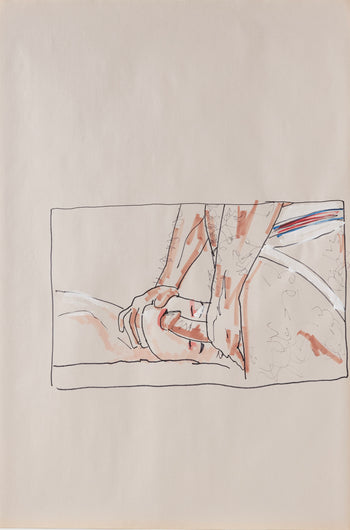
Clyde Archibald, Kneeling, ca 1960
Details
drawn from life at the Attic Studio, Portland.
signed with monogram,
AUCTION ITEMS ARE NOT ELIGIBLE FOR DISCOUNT CODES OR SHIPPING PROMOTIONS. Shipping for all auction items will be handled in a separate transaction. After the auction, we will follow up with each winner to provide shipping details and an invoice. The shipping method will be chosen based on the most economical and secure option for the destination route. Please note that each item ships from the location indicated in its product description above.
CULTUREEDIT ART AUCTION #6
Clyde Archibald
CLYDE ARCHIBALD, American Artist, born 1903. The endless variation of the human figure and the infinite human countenance have fascinated both artists and laymen for ages. Clyde James Archibald explored these subjects almost exclusively for decades in the vibrant medium of pastel. An Oregon native, he was born in Albany in 1903 and was noted early as 1913 by The Oregonian as a “clay artist prodigy.” After the First World War he entered Oregon Agricultural College majoring in engineering, also studying drawing and sculpture under Prof. J. L. Fairbanks. While in Arkansas in the 1930’s Archibald studied portrait and landscape painting under Adrian Brewer. Back to Portland, Oregon, he eventually established himself as a civil engineer. About 1933 he began drawing with the ”Attic studio." The "Attic" was a loosely organized non profit of artists which operated life classes. Such Oregon artist notables that frequented it, and friends of Archibald were Edward S. Quigley, Albert Patecky, Thayne Logan, and Clyde Leon Keller to mention a few. By 1939 the responsibility of running the studio was turned over to Mr. Archibald. They were able to keep this enchanting group going until 1967 when the cost of the studio rental and model wages forced its closure. This ended an important chapter in the art history of Portland. Archibald continued to be active in the Oregon Society of Artists exhibiting elsewhere as well, and winning prizes. He received recognition for this in television and newspaper coverage. Archibald also sculpted historical plaques in bronze which have been placed in various parks and sites in Oregon. Archibald’s most powerful work is found in his portraits of men—images charged with character, intimacy, and quiet allure. His pastel technique brings warmth to skin and complexity to expression, capturing not just bodies, but the magnetism behind them. Signed with his distinctive monogram, each portrait feels like a private moment held still: vulnerable, confident, and unmistakably sensual. For collectors, they offer something rare—male figures portrayed with both strength and desire, created for those who recognise their beauty.